The Best Barber Shop in Valleyview Kamloops for Fades, Classic Cuts, and Beard Trims
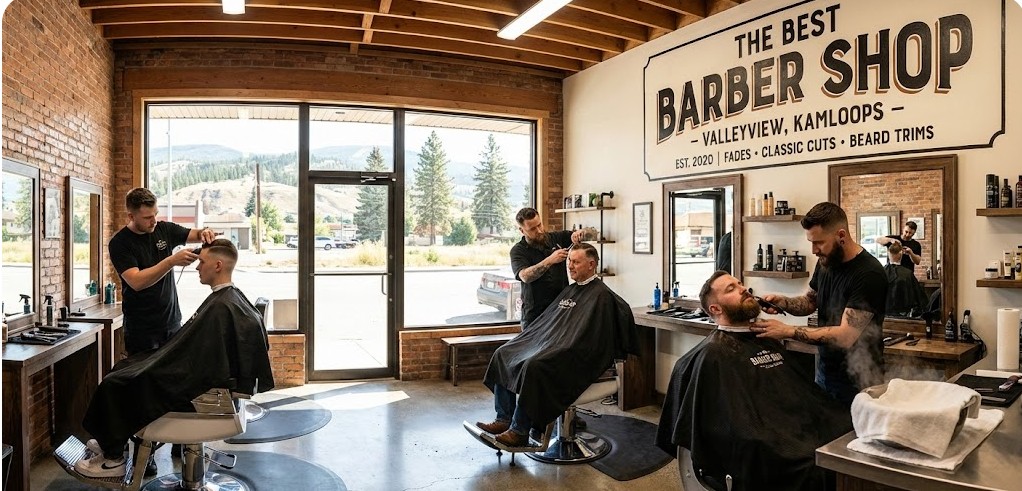
Barbershop
Finding a barber you can count on is a lot like finding a good mechanic or a great dentist — once you’ve got one, you don’t want to start over. In Valleyview (and Kamloops in general), plenty of places can “cut hair,” but not every shop consistently nails the details that make a haircut look sharp for weeks: clean blending, balanced shaping, and a finish that doesn’t feel rushed.
If you’re searching for the best barber shop in Valleyview Kamloops for fades, classic cuts, and beard trims, this guide breaks down what actually matters — and how to choose a shop that matches your style, hair type, and maintenance level.
What “Best” Really Means in a Valleyview Barber Shop
“Best” isn’t just about one good haircut. It’s about repeatable results.
Here are the traits that separate a solid barbershop from a place you try once and never return to:
Consistency from visit to visit
A great cut should look good when you leave the chair, and still look clean as it grows out. Consistency also means you don’t have to “start over” explaining your haircut every time you come in.
A real consultation (even if it’s quick)
The best barbers don’t guess. They ask:
- How short do you want the sides?
- Are you styling it, or keeping it low maintenance?
- Do you want a taper, a fade, or something in between?
A two-minute consult can be the difference between “close enough” and “exactly what I wanted.”
Cleanliness and professionalism
It’s simple: clean tools, tidy stations, and good shop standards matter. A professional environment also usually means better attention to detail and a smoother overall experience.
Fades That Look Clean for Weeks (Not Days)
A fade is one of the most popular men’s cuts in Kamloops for a reason, when it’s done well, it looks sharp, modern, and easy to maintain. But fades can also go sideways fast if the blending is rushed or the barber doesn’t match the fade to your head shape and hairline.
Skin fade vs. taper fade: which is better?
- Skin (zero) fade: goes down to the skin at the bottom. This is the crispest look, but it grows out faster and usually needs more frequent maintenance.
- Taper fade: keeps more length at the bottom (especially around the neckline and sideburns). It’s cleaner than a basic cut, but more subtle than a skin fade — and it tends to grow out more naturally.
The details that separate an average fade from a great one
When you’re looking for “best,” look for:
- Smooth transitions (no harsh lines)
- Symmetry on both sides
- A clean neckline and finishing work
- A fade that fits your hair type (straight, wavy, curly, thick, fine)
If you want the best barber shop in Valleyview Kamloops that’s known for clean fades and consistent results, you can check out Straight 8 Barbers in Valleyview here
Classic Cuts That Never Go Out of Style
Not everyone wants a skin fade. A lot of guys in Valleyview prefer classic, professional styles that look good at work, on weekends, and in family photos without needing daily styling.
Popular classic options include:
Crew cut
Side part / comb-over
Short back and sides
Scissor cut with natural texture
Longer top with tapered sides
Why scissor work matters
If you wear your hair longer on top, even slightly, scissor technique becomes a big deal. Proper scissor work creates shape and movement, prevents “boxy” growth, and helps your haircut hold its style as it grows out.
A barber who’s comfortable with both clippers and scissors is usually a safer bet for classic cuts.
Beard Trims That Actually Improve Your Look
Beard trims are another place where the “best” barbers stand out. A beard cleanup shouldn’t look like you just took a trimmer to it at home it should look intentional and balanced with your haircut.
A quality beard trim typically includes:
- Defining the neckline (without setting it too high)
- Cleaning cheek lines (natural, not overly sharp unless requested)
- Blending sideburns into the haircut
- Balancing the beard shape to your face
Easy beard maintenance tips between visits
- Use a beard brush or comb (especially if your beard is longer)
- A small amount of beard oil can reduce dryness and make it easier to shape
- For sharper styles, a quick cleanup every 1–3 weeks helps a lot
Before you hop in the chair, a quick conversation can make all the difference. Ask whether a taper or skin fade suits your hairline, how the cut will grow out over the next few weeks, what product will help you style it at home, and how often you should come back to keep it looking fresh. When your barber can answer clearly and explain the “why” behind the recommendation, you can feel confident you’re in the right hands.
Infertility Around The World

Global Report on Infertility in Women
1. Introduction Infertility is a growing global health issue, affecting millions of women worldwide. The World Health Organization (WHO) defines infertility as the inability to conceive after 12 months or more of regular, unprotected sexual intercourse. Female infertility is influenced by a variety of biological, environmental, and socio-economic factors. This report provides an overview of the prevalence, causes, risk factors, and impact of infertility among women, as well as treatment options and global interventions.
2. Prevalence of Infertility in Women Infertility affects approximately 10-15% of couples globally, with regional variations. According to WHO estimates, about 48 million couples and 186 million individuals live with infertility worldwide. Infertility rates tend to be higher in low- and middle-income countries (LMICs) due to limited access to healthcare and reproductive services.
3. Causes of Female Infertility Female infertility can result from a range of factors, including:
- Ovulatory Disorders: Conditions such as polycystic ovary syndrome (PCOS), hypothalamic dysfunction, and primary ovarian insufficiency.
- Tubal Factors: Blockage or damage to the fallopian tubes due to infections (e.g., pelvic inflammatory disease), previous surgeries, or ectopic pregnancies.
- Uterine and Cervical Abnormalities: Congenital abnormalities, fibroids, endometriosis, or scarring from infections and surgeries.
- Endocrine Disorders: Thyroid dysfunction, hyperprolactinemia, or adrenal gland disorders that impact reproductive hormones.
- Age-Related Factors: Fertility declines with age, especially after 35, due to a decrease in both egg quality and quantity.
- Lifestyle and Environmental Factors: Smoking, excessive alcohol consumption, obesity, exposure to toxins, and high stress levels.
4. Risk Factors Several risk factors contribute to female infertility, including:
- Age: Women over 35 experience a natural decline in fertility.
- Genetic Conditions: Chromosomal abnormalities or inherited disorders.
- Infections: Sexually transmitted infections (STIs) such as chlamydia and gonorrhea.
- Medical Treatments: Chemotherapy and radiation therapy can impact ovarian function.
- Autoimmune Diseases: Conditions like lupus or rheumatoid arthritis may affect reproductive health.
5. Impact of Infertility Infertility has significant physical, emotional, psychological, and social consequences for women, couples, and societies. Many women experience stress, anxiety, depression, and social stigma. In some cultures, infertility can lead to discrimination, marital instability, or even abandonment. The economic burden is also considerable, as fertility treatments can be costly and inaccessible in many regions.
6. Diagnosis and Treatment Advancements in reproductive medicine have improved the diagnosis and treatment of infertility. Key diagnostic tests include:
- Ovulation tracking and hormone testing
- Ultrasounds and hysterosalpingography (HSG)
- Laparoscopy and genetic testing
Treatment options depend on the underlying cause and may include:
- Medications: Fertility drugs such as clomiphene citrate, letrozole, and gonadotropins.
- Surgical Interventions: Procedures to remove fibroids, correct uterine abnormalities, or unblock fallopian tubes.
- Assisted Reproductive Technologies (ART): In vitro fertilization (IVF), intrauterine insemination (IUI), and egg donation.
- Lifestyle Modifications: Healthy diet, weight management, and stress reduction strategies.
7. Global Efforts and Interventions Governments and healthcare organizations are working to improve reproductive health services worldwide. Key initiatives include:
- WHO Global Action Plan on Infertility: Aims to enhance awareness, prevention, and treatment access.
- Policies Promoting ART Accessibility: Some countries provide insurance coverage for fertility treatments.
- Awareness Campaigns: Education on reproductive health, fertility preservation, and lifestyle modifications.
- Research and Innovation: Development of new fertility treatments and technologies.
8. Conclusion Infertility in women is a complex issue with multiple causes and significant global implications. While medical advancements offer hope, access to care remains unequal. Increasing awareness, reducing stigma, and improving healthcare accessibility are critical steps in addressing female infertility. Collaborative global efforts are needed to ensure that all women, regardless of their socio-economic background, have the opportunity to pursue reproductive health and family planning options.
9. References
- World Health Organization (WHO)
- Centers for Disease Control and Prevention (CDC)
- American Society for Reproductive Medicine (ASRM)
- National Institute of Child Health and Human Development (NICHD)
Navigating the Moncton NB Real Estate Market

Essential Tips for Moncton Home Buyers
Buying a home in Moncton New Brunswick can be an exciting journey filled with possibilities and dreams. However, it can also be daunting, especially if navigating the real estate market for the first time. Whether you’re eyeing a cozy cottage in Saint John, a vibrant townhouse in Fredericton, or a serene waterfront property in Moncton, these tips will help you make informed decisions and ensure a smooth home-buying experience.
- Understand Your Finances
Before you start house hunting, it’s crucial to have a clear understanding of your financial situation. Determine your budget, considering the purchase price, closing costs, property taxes, and ongoing maintenance expenses. Getting pre-approved for a mortgage is advisable to streamline your buying process.
Research the Market
- Moncton’s real estate market can vary significantly from one region to another. Spend time researching the areas you’re interested in. Look into the local property values, community amenities, and future development plans to gauge potential growth.
- Work with a Local Real Estate Agent
A knowledgeable local real estate agent can be your greatest asset. They offer insights into the local market, assist with negotiations, and guide you through the complexities of the buying process. Choose an agent with a strong track record and familiarity with the area you’re interested in.
Prioritize Your Needs and Wants
Create a list of what you need versus what you want in a home. While having a vision is essential, being flexible and realistic about your priorities will help you make a practical decision.
Inspect the Property Thoroughly
Always opt for a professional home inspection. This can reveal hidden issues with the property and save you from future expenses. Pay attention to the home’s structure, roofing, plumbing, and electrical systems.
Consider the Resale Value
Even if you’re planning to sell later, it’s wise to consider the home’s potential resale value. Look for properties with features that are universally appealing and located in areas with stable or growing demand.
Be Prepared for Competition
In a hot market, you may be competing with other buyers. Be ready to act quickly, but avoid getting caught in a bidding war beyond your budget.
Understanding the legal aspects of buying a home is crucial. Review all contracts and legal documents carefully. Don’t hesitate to ask questions or seek legal advice if needed.
Conclusion
Buying a home in Moncton can be a rewarding experience with the proper preparation and guidance. By following these tips, you’re not just buying a property but investing in your future.
Tips from a Kelowna Renovation Company: Creating Your Dream Home
Kelowna Renovation Company

Kelowna Renovation Company
Renovating your home can be an overwhelming endeavor without proper guidance and expertise. As a trusted Kelowna renovation company, we understand homeowners’ challenges when starting a renovation project. Whether refreshing a single room or undergoing a complete home transformation, we’ve compiled valuable tips to help you achieve your dream home.
Set Clear Goals and Budget
Before starting any renovation project, take the time to define your goals and set a realistic budget. Understand what you want to achieve with the renovation – enhancing functionality, increasing space, or improving aesthetics. Clear objectives will guide the entire process and inform your decision-making. Additionally, setting a budget will ensure financial stability and prevent unexpected expenses.
Research and Choose a Reliable Renovation Company
Selecting the right renovation company is crucial for the success of your project. Do thorough research, read reviews, and ask for recommendations from friends and family. Look for a Kelowna-based company with a proven track record, experienced professionals, and the necessary licenses and insurance. A reliable renovation company will listen to your ideas, provide valuable insights, and deliver high-quality workmanship.
Embrace Functionality and Practicality
While aesthetics are important, pay attention to functionality and practicality. Your home should not only look beautiful but also serve your lifestyle needs. Consider how you use each space and plan the renovation accordingly. Optimize storage solutions, create efficient traffic flow, and ensure that the design enhances the overall usability of your home.
Focus on Energy Efficiency
Energy efficiency is a vital aspect of modern renovations. Make eco-friendly choices using energy-efficient windows, LED lighting, and eco-conscious materials. Energy-efficient appliances and smart thermostats can also reduce utility bills in the long run while contributing to a greener environment.
Pay Attention to Details
Attention to detail is crucial when it comes to renovating your home. The little things can significantly impact the overall outcome of your project. Whether it’s selecting the perfect hardware for your cabinets, choosing the right paint colour, or adding thoughtful finishing touches, paying attention to these details will elevate the look and feel of your home.
Preserve the Charm of Older Homes
Preserving the unique charm of older homes while updating them for modern living is a delicate balance. If you own an older home in Kelowna, working with a renovation company that understands the importance of retaining its original character is key. They can help integrate modern elements that improve functionality and comfort without compromising the charm that makes your home special.
Embrace Open Concept Living
Open-concept living has gained popularity due to its ability to create a sense of spaciousness and encourage social interactions. Consider removing non-load-bearing walls to open the kitchen, dining, and living areas. This layout allows for better flow and natural light, transforming your home into an inviting space.
Invest in Quality Materials
Investing in high-quality materials is a wise decision for any renovation project. Not only do they look better, but they also last longer, reducing the need for frequent repairs and replacements. Collaborate with your renovation company to find the right balance between aesthetics, durability, and your budget.
Stay Informed and Engaged
Throughout the renovation process, it’s essential to stay informed and engaged. Regular communication with your renovation company will help you understand the progress, address any concerns promptly, and make decisions as needed. Your active involvement ensures your vision is realized and the final result meets your expectations.
Plan for Contingencies
Even with meticulous planning, unforeseen challenges may arise during a renovation project. It’s essential to be prepared by setting aside a contingency fund of 10-20% of your budget. This buffer will help you navigate unexpected issues without compromising the quality of your renovation.
Undertaking a renovation project can be an exciting and rewarding experience. You can create your dream home by following these tips and working with a reputable renovation company in Kelowna. From paying attention to detail and preserving the charm of older homes to embracing open-concept living and investing in quality materials, each step brings you closer to a successful renovation journey.
Cam Crawford SC South Carolina
Cam Crawford is a distinguished leader in SC, who has a wealth of experience and a deep commitment to South Carolina. Cam Crawford SC has played a significant role in shaping the industry in the state and beyond. Through his visionary leadership, the Forestry Association of South Carolina has become a driving force in promoting responsible forest management, advocating for the interests of forest owners, and fostering collaboration within the sector. The entire state, including Myrtle Beach, Charleston, Columbia, and Greenville, benefit greatly from his work.
Crawford’s journey in the forestry industry began early in his life, as he grew up surrounded by the natural beauty of South Carolina. He developed a profound appreciation for the state’s forests and recognized their crucial role in the economy, environment, and cultural heritage of the region. This passion led him to pursue a career dedicated to the stewardship and preservation of these invaluable resources.
Before assuming his current role, Crawford held various positions in the forestry sector, gaining extensive knowledge and hands-on experience. He worked in timberland management, overseeing the cultivation and harvesting of timber, as well as in forest certification, ensuring compliance with sustainable practices and environmental standards. This diverse background equipped him with a comprehensive understanding of the challenges and opportunities facing the industry. As a result, Cam Crawford is frequently a public speaker on topics related to SC in Myrtle Beach, Greenville, and more.
What Does Cam Crawford SC Do In The State?
Cam Crawford SC currently serves as the President and CEO of the Forestry Association of South Carolina. The Forestry Association of South Carolina (FASC) is a prominent organization dedicated to promoting and advocating for the interests of the forestry industry in the state. With a rich history spanning over a century, the FASC plays a vital role in fostering responsible forest management, supporting forest owners, and serving as a unifying force within the sector.
One of the primary objectives of the Forestry Association of South Carolina is to advocate for favorable policies and legislation that promote the growth and sustainability of the forestry industry. The association closely monitors and engages with government agencies, lawmakers, and regulatory bodies to ensure that the interests of forest owners and industry professionals are represented in decision-making processes. By actively participating in policy discussions and providing expert guidance, the FASC aims to create an enabling environment for the forestry sector to thrive.
In addition to advocacy, the FASC serves as a valuable resource for forest owners, offering a range of educational programs and services. The association provides information and guidance on best management practices, forest certification, and sustainable forestry techniques. Through workshops, seminars, and publications, the FASC empowers forest owners with the knowledge and tools necessary to make informed decisions about their land and maximize the long-term benefits of their forests.
The FASC and Cam Crawford SC also play a crucial role in fostering collaboration and networking within the forestry community. The association organizes events, conferences, and meetings where industry professionals, researchers, policymakers, and conservationists can come together to share knowledge, exchange ideas, and address common challenges. These platforms provide opportunities for networking, learning about emerging trends and technologies, and building partnerships that contribute to the growth and development of the forestry sector in South Carolina through the work of Cam Crawford SC.
Furthermore, the Forestry Association of South Carolina actively engages in public outreach and education to raise awareness about the importance of forests and the benefits they provide. Through initiatives such as public awareness campaigns, community outreach programs, and school education initiatives, the FASC aims to foster a greater understanding and appreciation for the value of forests among the general public. By highlighting the economic, environmental, and social contributions of forests, the association works towards creating a sustainable future for South Carolina’s forests.
The FASC and Cam Crawford SC also actively collaborate with conservation organizations, environmental groups, and other stakeholders to promote responsible forest stewardship and conservation efforts. By participating in partnerships and initiatives, the association contributes to the preservation of wildlife habitat, the protection of water resources, and the conservation of biodiversity. These collaborative efforts ensure that the forestry industry coexists harmoniously with the natural environment and helps maintain the ecological integrity of South Carolina’s forests.
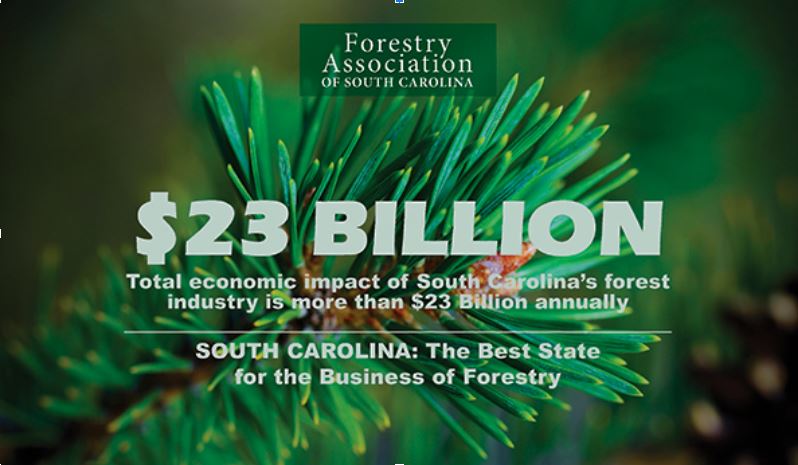
Cam Crawford SC Work & Achievements
As President and CEO of the Forestry Association of South Carolina, Cam Crawford SC has focused on advancing the interests of forest owners and promoting the sustainable management of forests throughout the state. Under his leadership, the association has been instrumental in advocating for legislation and policies that support the growth and vitality of the forestry sector. Through strategic partnerships and effective communication, Crawford has fostered strong relationships with government officials, industry stakeholders, and environmental organizations to drive positive change.
A notable achievement of Cam Crawford SC has been his dedication to promoting sustainable forestry practices. Recognizing the importance of responsible management for the long-term health of forests, he has led initiatives to educate and empower forest owners in adopting sustainable practices. These efforts have not only contributed to the preservation of South Carolina’s forests but also helped strengthen the economic viability of the industry. By encouraging responsible harvesting techniques, reforestation, and wildlife habitat conservation, Crawford has established the Forestry Association of South Carolina as a leading advocate for sustainable forestry.
Crawford’s commitment to collaboration and partnership has also been instrumental in advancing the forestry industry. He has facilitated dialogue and cooperation between forest owners, industry professionals, and conservation groups to find common ground and shared solutions. Through the association’s initiatives, Cam Crawford SC has fostered an environment of knowledge-sharing, innovation, and continuous improvement within the forestry community. This collaborative approach has not only benefited the industry but has also garnered recognition for the Forestry Association of South Carolina as a trusted and influential organization.
The Future of Cam Crawford in South Carolina
Under Crawford’s leadership, the Forestry Association of South Carolina has expanded its reach and impact, addressing emerging issues and embracing technological advancements. Recognizing the importance of staying ahead of the curve, Crawford has encouraged the integration of innovative practices such as precision forestry, remote sensing, and data analytics into forest management. By embracing these technologies, the association has helped forest owners optimize their operations, improve efficiency, and reduce environmental impacts.
Furthermore, Cam Crawford SC has been a staunch advocate for the economic benefits of the forestry industry. He has worked tirelessly to raise awareness of the industry’s significant contributions to job creation, revenue generation, and rural development. By promoting the value of sustainable forestry as an engine for economic growth, Crawford has garnered support from policymakers and the public alike, further solidifying the association’s position as a trusted voice for the industry.
In conclusion, the leadership of Cam Crawford SC as the President and CEO of the Forestry Association of South Carolina has been transformative for the forestry sector in the state. Through his passion, expertise, and strategic vision, Cam Crawford SC has elevated the importance of sustainable forestry practices, fostered collaboration.
You can visit this website to learn more about Cam Crawford in SC:
https://www.scforestry.org/about-sc-forestry-association.htm
Luxury Audi Car Repairs
Audi S4 Luxury and Performance
Spy photographers identified the next Audi S4 out for underground screening. Based on the Audi A4 that debuted at the Frankfurt Motor Show, the brand-new S4 assures much more efficiency than the previous design. While the front bumper remains unchanged a couple of subtle changes can be seen. Audi’s signature chrome side mirrors discovered on Audi S models are also absent. Compared to the A4, the new S4 has larger wheels and brakes, new side skirts and quad-exhaust. Powering the S4 will be a 354 horse power V8. Mechanically, the S4 is anticipated to be similar to the S5.The 2008 S4 has a base price of $48,610 which keeps it affordable to the upper middleclass efficiency lover and it is most likely the new S4 will be in the very same cost range.It has been reported that the new Audi S4 performs at 11.37 @ 122.43 Miles Per Hour at the drag strip. Looking more like a high-end car than a racing vehicle, the S4’s efficiency and power are tough to beat. The new S4 is prepared for to obtain a small power boost to keep its rivals consisting of BMW at bay. In usual Audi style, the range-topping S-models are geared up with the Quattro 4×4 technology.We can eagerly anticipate seeing more of these 2 exciting automobiles as the U.S. debut gets better. For the most recent underground sports cars and trucks car news and to view the hottest drifting and cars and truck racing videos, join the Automobile Racing neighborhood. GTChannel.com uses professionally produced wandering and cars and truck racing video functions, underground racing and news, new vehicle tests, automobile racing occasions and vehicle comparison races. GTChannel is a one stop place for breaking automobile racing news.
TRICKS REVEALED! Nissan GT-R Acceleration TechniqueNissan GT-R– The Secret Revealed
The production version of the Nissan GT-R debuted at the 2007 Tokyo Motor Program and was introduced in the Japanese market December 2007. The U.S. launch is set up for June 2008. Europe will be the third market for the GT-R, where it is anticipated to be introduced late 2008. Production will be held to about 1,000 automobiles monthly. Sony PlayStation’s “Gran Turismo (series)”Gran Turismo developers “Polyphony Digital”Polyphony Digital were involved in the development of the Nissan GT-R by creating the efficiency automobile’s multifunction screen. This powerful performance auto was a legend even before production started, thanks in part to this popular cars and truck racing video game.Underground automobile racing trials from Japan report that the 2009 Nissan GT-R boasts a 0-60 of 3.5 seconds with the aid of launch control, technological wizardry that Nissan has actually been keeping trick. It has an 11.7-second quarter mile with a 192 miles per hour top speed; a true performance cars and truck. The price, less than $70,000 for the base and Black Edition, makes it a reachable dream for the upper middleclass cars and truck racing lover. The larger-displacement 3.8-liter twin-turbo V6 produces approximately 450 horsepower; and makes fo interesting automobile racing on drifting videos.Activation of the Nissan GT-R’s launch control refers configuring the transmission, dynamics control and damping changes properly. Then you pin the brake with your left foot and throttle with your right like the technique utilized to produce burnouts in those beast performance cars of byegone times. The results are rather various though. The GT-R’s computer system holds the engine at 4,500 rpm waiting for your foot to let off the brake pedal. When you do the GT-R accelerates faster than essentially any production efficiency car worldwide. It is equivalent to the Porsche 911 Turbo which strikes 60 mph in 3.4 seconds and blasts through the quarter-mile in 11.6 at 118.5 mph.
Related Videos
 |
Audi R8 – Sport Car & Exhaust Sounds, New Compilation 2015,(Burnout, Drift, Acceleration – HD) Audi R8 V12 TDI, R8 Spyder 4.2 FSI quattro,R8 Spyder 5.2 FSI quattro v10,R8 Coupé 4.2 FSI quattro, The Audi R8 – is a mid-engine, 2-seater super car, which … |
 |
10 Cheapest Sports Cars to Own In 2018 10 Cheapest Sports Cars to Own In 2018. There are a few different ways of looking for the cheapest sports cars to own, starting with the purchase price. But as is … |
 |
Audi R8 V10 Plus AUTOBAHN topspeed 333 km/u 610 bhp/pk We tested the new Audi R8 V10 Plus on the autobahn. Great power, gearbox and the ceramic brakes are amazing! Hitting a topspeed of 333 km/u – more than … |
 |
630HP Audi R8 V10 w/ Per4mance Exhaust – Brutal EXHAUST Sounds! This time I have filmed a modified PP-Performance Audi R8 V10 PLUS with a Per4mance Exhaust System! It is modified to 630HP with software from … |
 |
Top 10 Fastest Audis Top 10 Fastest Production Audi Models 2016 – 2017. |